Maison XO – TelePort
Gifting as easy as sending a text
What this suggests: a gift is a trusted introduction. Make it safe to accept and every recipient becomes the next sender - virality powered by trust.
The problem
Sending a gift requires knowing their address: ask and you spoil the surprise, don't ask and you're holding their data. The thesis: remove that friction safely and gifting becomes a viral loop.
The prototype
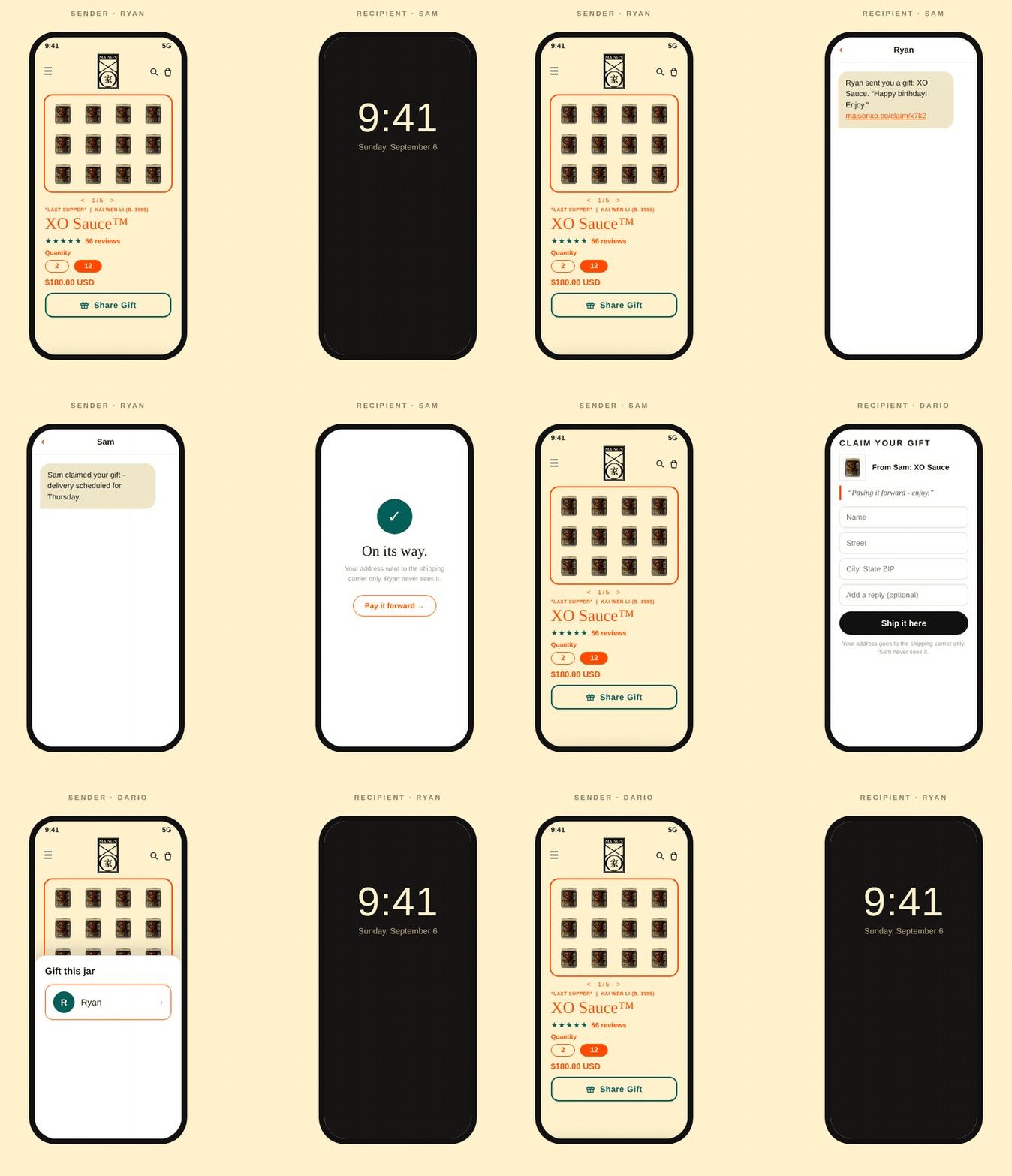
One flow, two phones: the sender never leaves the product page; the recipient claims with their own address. Nobody sees what they shouldn't.
The mechanic: who sees what
The sender never sees an address; the recipient enters it themselves, once, at claim time.
The growth thesis
Every recipient was one tap from becoming the next sender, and scoped disclosure is what made that introduction safe to accept. The loop was never measured; the prototype stopped before it could turn.
Why this matters for an agent
An agent needs credentials, addresses, and payment methods to act; convenience is assumed to cost data exposure. This is a counterexample: friction removed, control retained, every party aware of what the others see. Personal agents get called single-player; a gifting agent is two-sided by construction.