Maison XO — ShipNote
Gifting as easy as sending a text
What this suggests: scoped disclosure - every party sees only what they need - is the trust primitive agentic commerce runs on.
The trust problem
Sending someone a physical gift normally requires knowing their address. That is both a friction wall and a privacy cost: you either ask, which spoils the surprise, or you already hold their data.
The thesis was that removing that friction would create a viral loop of infectious generosity.
The prototype
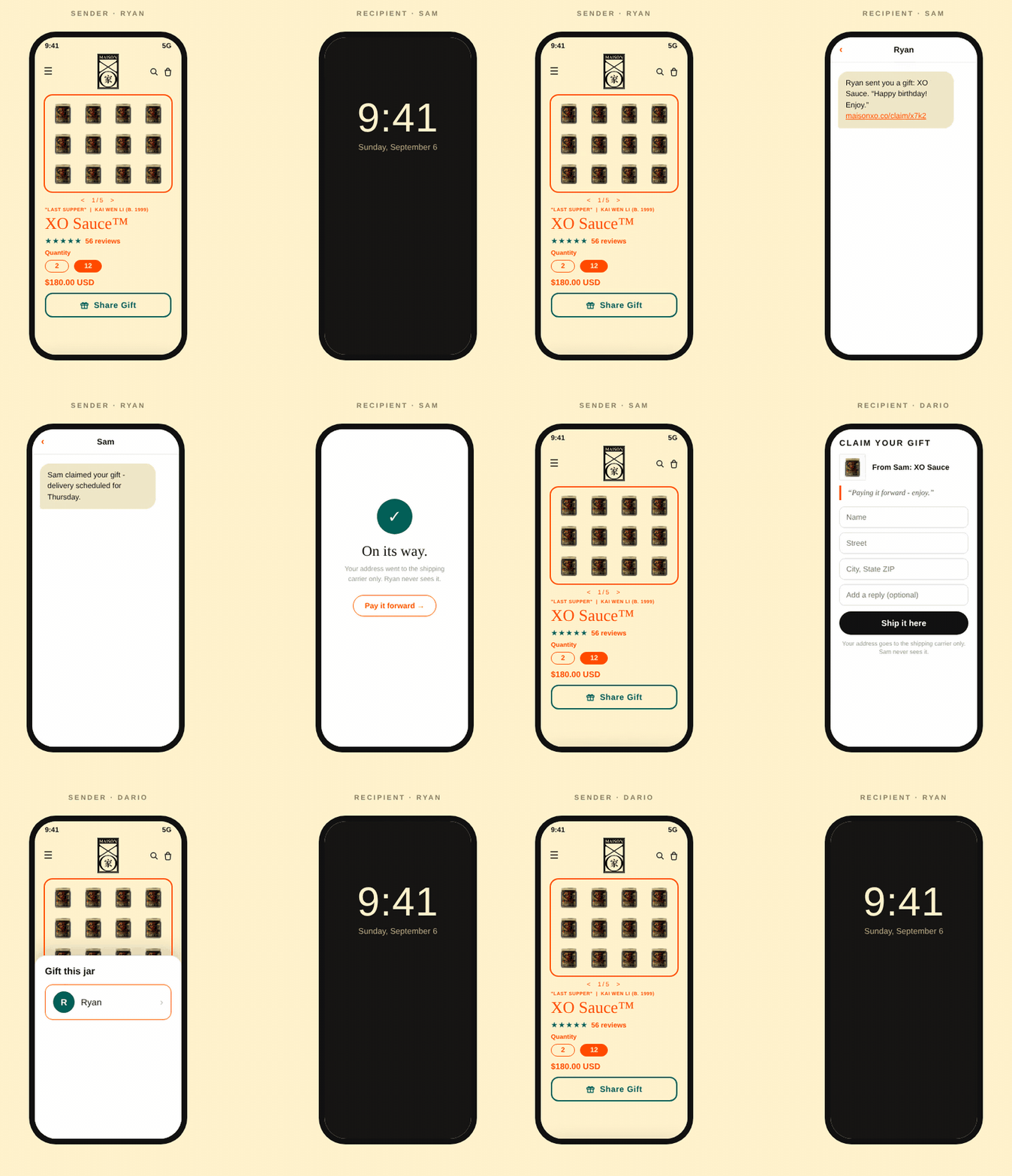
One flow, two phones. The sender never leaves the product page; the recipient claims the gift with their own address and a reply. Nobody sees what they shouldn't.
Who sees what
The friction is the surprise. Ask for the address and you spoil it; do not ask and you are holding their data. The flow routes around both: the sender never sees an address, and the recipient enters it themselves, once, at claim time.
The plugin is also the growth lever. Every gift delivered is a customer acquired by the last one, and each recipient is one tap from becoming the next sender. That loop is the virality coefficient, and it costs nothing per turn.
What happened
This shipped as a prototype and stopped there. Shopify does not let a third party write shipping details into checkout after the fact, and the workaround required becoming the merchant of record.
Why this matters for an agent
An agent needs credentials, addresses, and payment methods to act. The default assumption is that convenience gets bought with data exposure. This is a working counterexample: friction removed, control retained, and every party knows exactly what the others can see.